
IICRC-Certified Water Damage Editorial Reviewer · Georgia Field Experience
Published: May 1, 2026Last Updated: May 1, 20269 min readReviewed against IICRC S500 / S520 / S700
Why Your House Still Smells Musty After Water Damage Cleanup
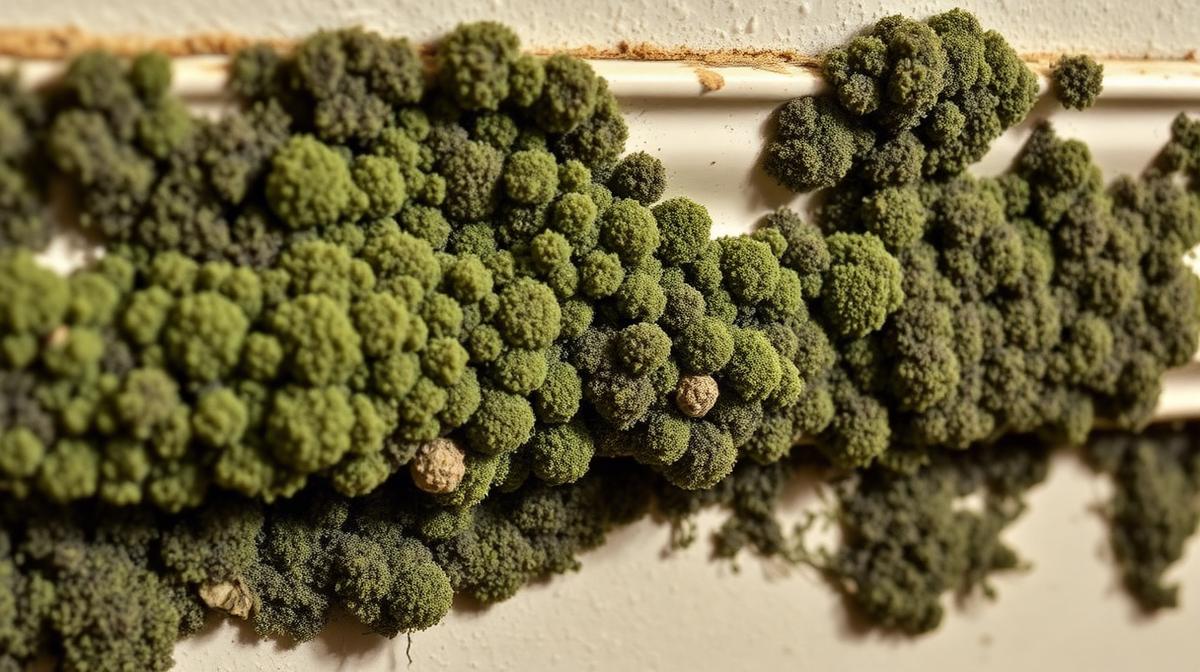
A musty smell after water damage cleanup means moisture or microbial growth is still present. Real causes, where to look, and how pros fix it for good.
- —A lingering musty smell almost always means trapped moisture or microbial growth is still present somewhere the crew did not reach — typi…
- —If drying was done correctly to industry standards (moisture content below 16% in wood and below 1% MC in drywall), the smell should be g…
- —No. Air fresheners only mask the odor temporarily, and consumer ozone generators damage rubber and electronics without removing the moist…
- —Sometimes — if you can document that the original loss was the cause and the carrier signed off on incomplete drying. Most carriers will …
The carpet looks dry. The walls feel dry. The contractor packed up the air movers a week ago. But every time the AC kicks on, that wet-basement smell rolls through the living room and settles into every cushion. If that sounds familiar, the cleanup was not actually finished.
A musty smell after restoration is not cosmetic and it is not a "let it air out" problem. It is your house telling you that microbial growth has already started somewhere the drying equipment did not reach. This guide explains exactly where that smell comes from, how restoration pros track it down, and why ignoring it costs more than fixing it.
Quick Answer — What Causes a Musty Smell After Water Damage Cleanup
A musty smell after water damage cleanup is caused by microbial volatile organic compounds (MVOCs) released by mold and bacteria growing on building materials that are still holding moisture. Common hidden sources include wall cavities, subfloor under hardwood, insulation behind drywall, HVAC ducts, and cabinet kickplates. The smell will not go away on its own.
What Is That Musty Smell, Actually?
The odor comes from microbial volatile organic compounds — MVOCs. As mold and bacteria digest the cellulose in drywall paper, wood framing, paper-faced insulation, or carpet backing, they release a mix of alcohols, aldehydes, and ketones into the air. The human nose detects MVOCs at concentrations as low as parts per billion, which is why you can smell hidden mold long before you can see it.
That sensitivity is useful. The smell is essentially an early-warning alarm — pointing to a problem that visual inspection has not yet revealed. Treat the smell as data, not a nuisance.
Why It Matters: The Cost of Ignoring It
Microbial growth doubles roughly every 24–48 hours in conditions above 60% relative humidity. A wall cavity that smells faintly musty today will often have visible colonization within two weeks. The restoration scope expands from a few square feet of antimicrobial treatment to full mold remediation, drywall removal, and air-quality clearance testing. Cost typically climbs from $400 to between $3,000 and $9,000.
Where the Smell Usually Hides
1. Inside Wall Cavities
Drywall feels dry to the touch within hours of extraction, but the back side of the drywall — and the studs and insulation behind it — can hold moisture for weeks. If equipment was placed too far from the wet wall or the wall was not opened for direct airflow, the cavity stays wet. This is one of the most common hidden moisture sources.
2. Under Hardwood Subfloor
Hardwood looks dry on top but the subfloor underneath is plywood or OSB that absorbs water like a sponge. Standard drying often leaves it at 18–22% moisture content. The fungal threshold is 16%. Translation: it grows, and you smell it.
3. Behind Cabinets and Baseboards
Kitchen kickplates, bathroom vanities, and the back of any cabinet attached to a wet wall trap moisture against drywall and create the perfect microbial environment.
4. HVAC Ducts and the Air Handler
If the air handler was running during or after the loss, contaminated air pulled spores into the duct system. Those spores attach to dust inside the ducts and grow when humidity rises.
5. Wet Insulation Left in Place
Wet fiberglass insulation does not dry. It compresses, loses R-value, and becomes a sponge for microbial growth. Restoration standards (IICRC S500) require its removal if exposed to Category 2 or 3 water.
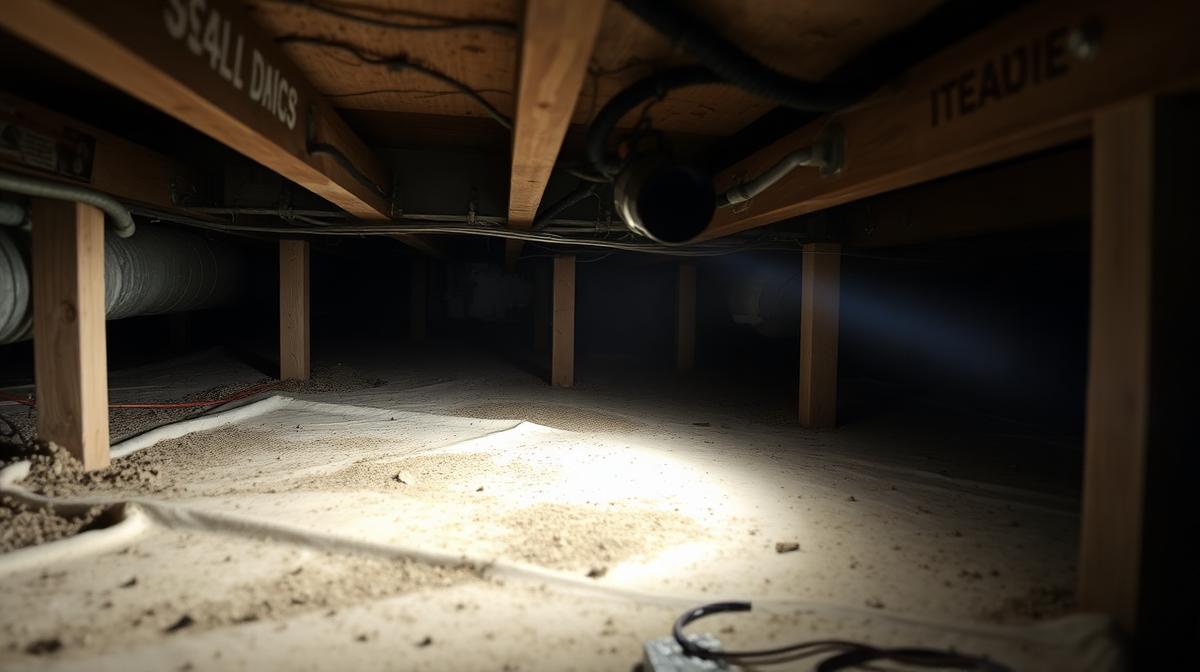
How Restoration Pros Hunt Down the Source
Finding the hidden moisture is a systematic process, not a guessing game. Here is the sequence a certified IICRC technician follows:
- Walk-through with a thermal imaging camera. Wet materials evaporate, evaporation cools the surface, and the camera shows a temperature differential. More on thermal imaging for water detection.
- Confirm with moisture meters. Pinless meters for non-invasive surface readings, pin meters for direct moisture content inside materials.
- Pull baseboards and inspect the bottom 4 inches of drywall. If readings are above 16% MC at the bottom plate, the cavity is still wet.
- Borescope inspection. A small camera through a 1/2-inch hole in the drywall confirms cavity condition without opening the wall.
- Air-quality sample if growth is suspected. Identifies species (Aspergillus, Penicillium, Stachybotrys) to determine remediation scope.
The Fix: What Actually Works
The only permanent solution is removing the source, not masking the symptom. The protocol:
- Open the wall — a 4-foot flood cut exposes the cavity for direct airflow and visual inspection.
- Remove wet insulation and contaminated drywall per IICRC S500 standards.
- Apply registered antimicrobial to framing and remaining structural elements.
- Dry to standard — wood framing below 16% MC, drywall below 1% MC.
- Verify with post-remediation moisture readings and (if scope warrants) third-party clearance testing.
Smell still there a week after cleanup?
Call listed contractors directly and ask about thermal imaging, moisture meters, written findings, and inspection fees before scheduling.
What Homeowners Can Check Right Now
Before you call anyone, run this 10-minute self-check:
- Press firmly along the bottom 6 inches of drywall in the affected room. Any soft spots?
- Pull back the corner of carpet at the edge of the affected area. Is the pad damp?
- Open base cabinets near the loss site and smell inside. Smell stronger there?
- Turn off the HVAC fan and let the room sit for 30 minutes. Does the smell get worse with the air still?
- Run your hand along the inside of supply registers. Any visible dust accumulation that smells musty?
Any "yes" answer means there is still moisture somewhere — and the cleanup is not done.
What Homeowners Learn from Atlanta Re-Inspections
When a homeowner calls for a second opinion a week or two after cleanup, the pattern is often the same. The crew that did the original work dried what they could see and pulled their equipment on schedule. Nobody opened a wall. Nobody pulled baseboards. Nobody put a moisture meter on the bottom plate. The job looked finished. Two weeks later, the HVAC kicks on for the first warm afternoon and the smell shows up like clockwork.
The readings on those callbacks are often consistent: 19–24% moisture content in the bottom plate of the affected wall, well above the 16% fungal threshold, with visible Penicillium growth on the back of the drywall paper. The original drying never reached the cavity. The smell was always going to come back. This is why moisture documentation matters more than visible dryness.
When the Smell Is Not Mold
About one in eight musty-smell callbacks turn out to be something other than active growth. The usual non-mold culprits: stagnant water in a P-trap that hasn't been run in months (common in guest bathrooms), a saturated HVAC condensate pan, a bird or rodent that died in an attic or wall during the original event, or sewer gas seeping past a dried-out wax ring. A thorough inspection rules these out before recommending wall demolition.
Related Reading
Continue learning: 5 signs of water damage hidden behind walls · how fast mold grows after a leak · moisture mapping for mold prevention · browse the water damage contractor directory.
Frequently Asked Questions
Why does my house still smell musty after the water damage cleanup is done?
A lingering musty smell almost always means trapped moisture or microbial growth is still present somewhere the crew did not reach — typically inside wall cavities, under flooring, behind cabinets, or in HVAC ductwork. The odor is produced by mold and bacteria metabolizing organic material in wet building components.
How long should a musty smell last after water damage restoration?
If drying was done correctly to industry standards (moisture content below 16% in wood and below 1% MC in drywall), the smell should be gone within 3–5 days of equipment removal. A smell that persists beyond a week indicates hidden moisture or incomplete remediation.
Can I cover up a musty smell with air fresheners or ozone?
No. Air fresheners only mask the odor temporarily, and consumer ozone generators damage rubber and electronics without removing the moisture source. The only permanent fix is finding and drying the remaining wet material, then removing whatever has grown microbially.
Does insurance cover finding and fixing a musty smell after a claim is closed?
Sometimes — if you can document that the original loss was the cause and the carrier signed off on incomplete drying. Most carriers will reopen a claim within 12 months if a licensed restoration company provides moisture readings showing the original loss was not fully resolved.
How do professionals find the source of a musty smell?
Professionals often use a combination of moisture meters, thermal imaging cameras, and air-quality sampling. The thermal camera shows temperature differentials caused by evaporation. Moisture meters confirm the reading at the wall surface. Air samples identify mold species when visual inspection is inconclusive.
Related Articles You May Find Helpful
Compare water damage contractors near you
Need Help Right Now?
Phone: (470) 398-4095
✓ Directory help for Georgia homeowners
✓ Compare local water-damage contractors
✓ Contractor phones stay contractor-owned
EmesticaCure is a water damage contractor directory. Browse contractors or call (470) 398-4095 for help finding one.