
IICRC Master Restorer · 18 Years in Georgia Restoration
Published: April 29, 2026Last Updated: April 29, 20268 min readReviewed against IICRC S500 / S520 / S700
How to Dry a Flooded Carpet in Georgia Without Causing Mold
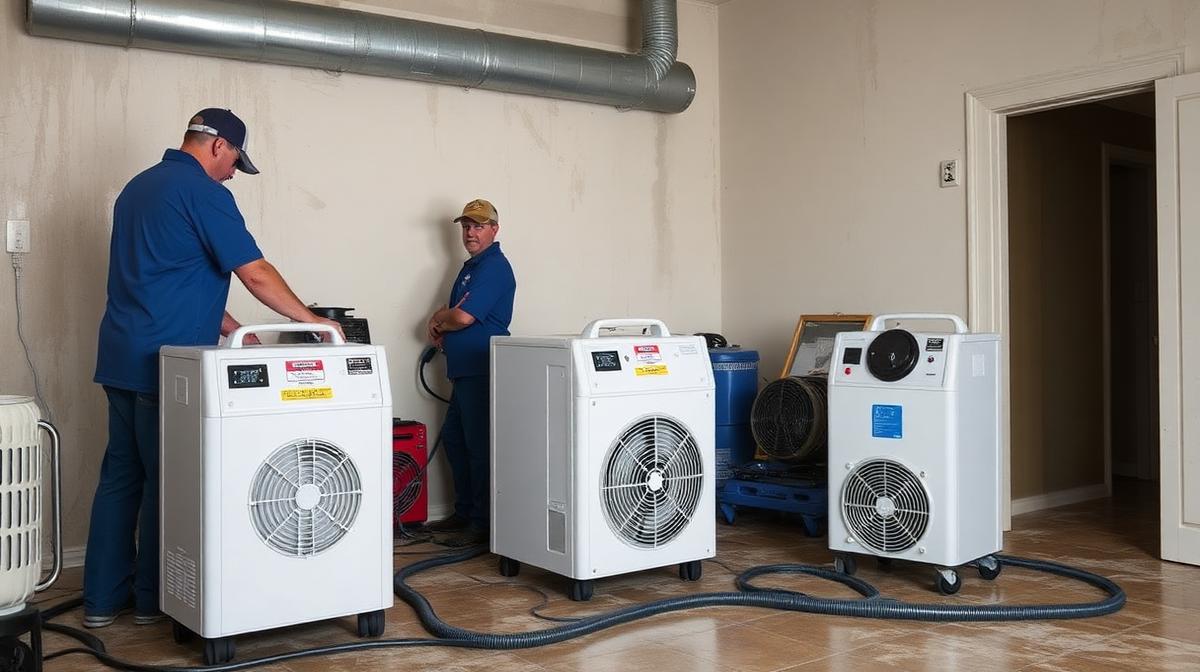
Flooded carpet in Georgia? You have 24 hours before mold. Step-by-step drying guide, when to save the pad, and when to call a pro.
- ▸24 hours, not the 72 hours you'll see online. Georgia's average humidity (70%+ year-round) cuts the mold timeline by more than half compa…
- ▸Almost never. The pad acts like a sponge — it holds 3–5x its weight in water and traps it against the subfloor. Even with industrial dryi…
- ▸For a 200 sq ft room, you need a commercial-grade LGR dehumidifier rated for at least 100 pints/day, plus 2–3 air movers. Home Depot box-…
- ▸For under 50 sq ft of clean water caught immediately, yes. For anything larger, anything sitting more than 2 hours, or any contaminated w…
A washing machine supply line pops in a Lawrenceville townhome at 11 AM. By the time the homeowner gets home from work at 6 PM, 200 square feet of bedroom carpet is soaked through to the pad. The clock isn't 72 hours — in Georgia humidity, you have 24.
This guide gives you the exact step-by-step drying sequence professional restoration crews use, what equipment actually works in Georgia humidity, and the point at which DIY becomes a $5,000 mistake. If the flood is bigger than 50 sq ft or has been sitting more than 2 hours, call EmesticaCure at (470) 398-4095.
TL;DR — Drying Flooded Carpet in Georgia
Extract water in the first 2 hours. Pull and discard the carpet pad. Apply antimicrobial. Run commercial LGR dehumidifier + 2–3 air movers for 3–5 days. Verify under 12% moisture content with a meter. Reinstall new pad and re-stretch carpet. DIY only for under 50 sq ft of clean water.
Why Georgia Humidity Cuts Your Drying Window in Half
Most national guides say "you have 72 hours before mold starts." That's based on 50% relative humidity averages. Georgia's average year-round humidity is 70%+, with summer days routinely hitting 85–90%. At those moisture levels:
- Wet drywall begins mold growth at 24 hours, not 48
- Wet carpet pad is unsalvageable at 48 hours, not 72
- Subfloor mold can start at 36 hours if the pad isn't pulled
Atlanta, Marietta, Alpharetta, Lawrenceville, Decatur — all metro Georgia is in the same humidity zone. The clock starts the moment the water hits the floor.
The 6-Step Pro Drying Sequence (Do These In Order)
- Stop the source and shut off power. Find the leak, shut off the water supply, kill power to outlets in the affected room.
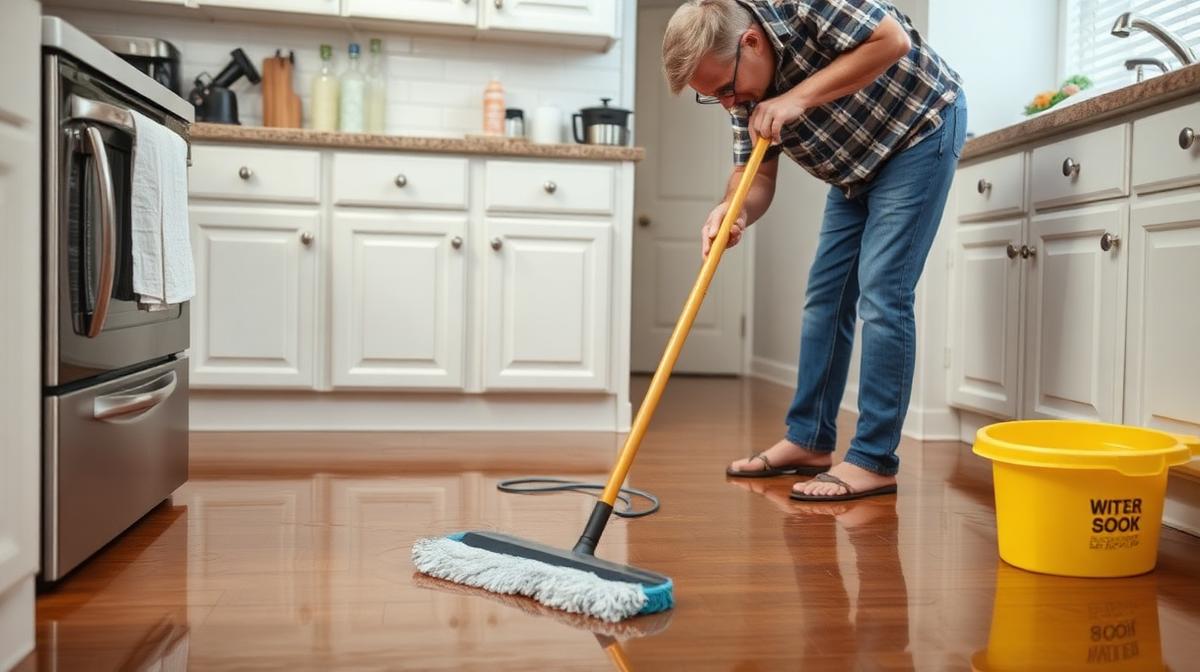
- Extract standing water within 2 hours. Rent a heavy-duty wet/dry vac (16+ gallons, 6+ HP) from Home Depot for $40/day. Slow, overlapping passes — one square foot at a time. A pro extractor pulls 8–10x more water per pass.
- Pull the carpet pad out. Cut the carpet along baseboards on one side, fold it back, cut the wet pad into 3-foot strips, bag it and discard. Do not try to save the pad — Georgia humidity will not dry it before mold starts.
- Apply antimicrobial to the subfloor. Spray a registered antimicrobial (BioCide, Sporicidin, or Microban) on the exposed subfloor. Let it dwell 10 minutes.
- Set commercial drying equipment. A 100+ pint LGR (low-grain refrigerant) dehumidifier in the room, drained continuously to a sink or condensate pump. Plus 2–3 axial air movers angled at 45° around the room perimeter to lift the carpet and circulate air underneath. Run 24/7 for 3–5 days.
- Verify dryness with a moisture meter. A pinless moisture meter ($60 from Amazon) reads through the carpet into the subfloor. You're done when readings hit 12% MC or below across the entire flooded area.
Bigger than 50 sq ft, or sitting more than 2 hours?
DIY equipment can't keep up with Georgia humidity at scale. Call EmesticaCure at (470) 398-4095 — truck-mounted extraction, commercial drying, IICRC-certified, insurance billed direct.
When DIY Becomes a $5,000 Mistake
Call a professional immediately if any of these apply:
- Flooded area larger than 50 sq ft
- Water has been sitting more than 2 hours
- Source is contaminated (toilet, sewer backup, dishwasher, washing machine)
- Water reached drywall, baseboards, or under wall cavities
- Multi-room flood
- Subfloor is plywood that's now soft or buckling
- You smell anything musty within 48 hours of drying
For the broader emergency response framework, read what to do after water damage in Georgia.
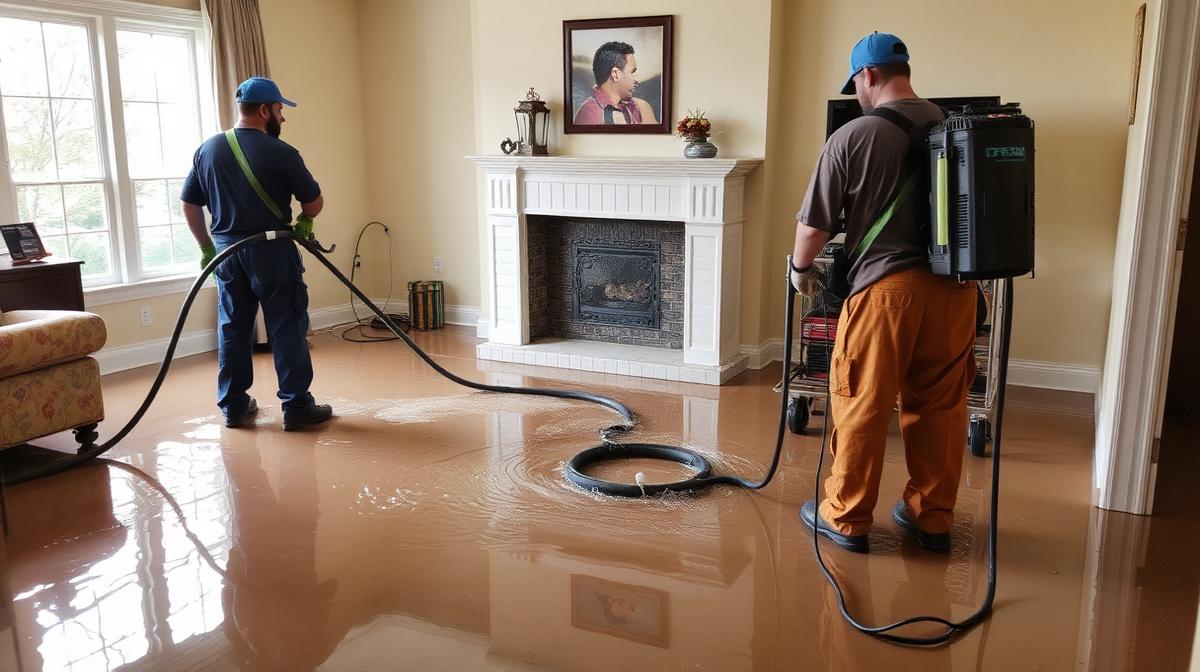
Equipment That Works vs Equipment That Doesn't
What Works in Georgia
- LGR dehumidifiers (100+ pints/day) — the only kind that pulls moisture below 60% RH
- Axial air movers (3,000+ CFM) — push air across the carpet surface
- Truck-mounted extractors (200+ PSI) — pull water out of the carpet fibers
What Doesn't Work
- Box-store 30–50 pint home dehumidifiers — too slow for Georgia humidity
- Box fans — circulate air but don't have enough CFM to lift carpet
- Standard household wet vacs — leave 60%+ of the water in the pad
- Opening windows — when outside humidity is 80%, you're making it worse
Cost in Georgia (2026 Numbers)
- DIY equipment rental + new pad: $200–$450 (only for under 50 sq ft)
- Pro single-room carpet drying: $500–$1,800
- Whole-floor flooding (multi-room): $2,500–$6,000
- Carpet replacement if drying failed: add $3–$8 per sq ft
- Mold remediation if missed: add $2,500–$8,000
For the full Georgia cost framework, see our water damage restoration cost guide.
Insurance: Will Georgia Carriers Cover Carpet Drying?
Yes — if the source was sudden and accidental (burst pipe, appliance failure, roof leak from storm). Standard HO-3 policies pay for water extraction, structural drying, antimicrobial, pad replacement, carpet re-stretching, and full carpet replacement when it can't be saved. Insurance typically denies gradual leaks, groundwater flooding (needs separate flood insurance), and unmaintained appliances.
For the full insurance walkthrough, see does homeowners insurance cover water damage, how to file your claim, and water damage vs flood damage.
How to Tell If Drying Worked
- Moisture meter reads under 12% MC across the whole flooded area
- No musty smell anywhere in the room
- Carpet feels completely dry to the touch (including underneath when lifted)
- Subfloor is firm, not soft or springy
- No discoloration or warping at the baseboards
If any of these fail at the 5-day mark, you have hidden moisture and likely mold starting. Read how mold develops after water damage in Georgia and signs of hidden water damage.
Why Georgia Homeowners Call EmesticaCure for Carpet Flooding
We respond to flooded carpet emergencies across Atlanta, Marietta, Alpharetta, Lawrenceville, Decatur, Sandy Springs, and metro Georgia within 30 minutes. Truck-mounted extraction pulls 8–10x more water than DIY rentals. IICRC-certified, fully licensed in Georgia, insurance billed direct.
See our water damage restoration services or browse our full Georgia service area map.
Frequently Asked Questions
How long do I have to dry a flooded carpet in Georgia before mold starts?
24 hours, not the 72 hours you'll see online. Georgia's average humidity (70%+ year-round) cuts the mold timeline by more than half compared to drier climates. After 24 hours in wet carpet, mold spores activate. After 48 hours, the carpet pad is usually unsalvageable.
Can I save the carpet pad after a flood in Georgia?
Almost never. The pad acts like a sponge — it holds 3–5x its weight in water and traps it against the subfloor. Even with industrial drying, Georgia humidity keeps the pad wet. Pull it, throw it out, replace it. New pad costs $0.40–$0.80 per sq ft.
What size dehumidifier do I need to dry a flooded carpet in Georgia?
For a 200 sq ft room, you need a commercial-grade LGR dehumidifier rated for at least 100 pints/day, plus 2–3 air movers. Home Depot box-store dehumidifiers (30–50 pints) are not enough — they can't pull moisture out fast enough in Georgia humidity to beat the mold clock.
Should I rent a wet vac and dry the flooded carpet myself in Georgia?
For under 50 sq ft of clean water caught immediately, yes. For anything larger, anything sitting more than 2 hours, or any contaminated water (toilet, washing machine, dishwasher), call a pro. DIY drying in Georgia humidity has roughly a 70% mold failure rate at 14 days.
What does professional carpet drying cost in Georgia?
Expect $500–$1,800 for a single room and $2,500–$6,000 for whole-floor flooding. Includes water extraction, antimicrobial treatment, dehumidifier and air mover rental for 3–5 days, daily moisture checks, and pad replacement. Insurance covers it minus your deductible.
About the Author
James Holloway is an IICRC-Certified Restoration Specialist with 12+ years of field experience responding to water and fire emergencies across Georgia. He holds an active S500 Water Damage Restoration certification and trains EmesticaCure crews on Georgia-humidity-specific drying protocols.
Related Articles You May Find Helpful
Need Help Right Now?
Phone: (470) 398-4095
✓ Free inspection — no obligation
✓ We handle your insurance paperwork
✓ Licensed Georgia restoration contractor
EmesticaCure serves 190+ cities across Georgia. Find your city or call (470) 398-4095 now.