
IICRC-Certified Water Damage Editorial Reviewer · Georgia Field Experience
Published: May 15, 2026Last Updated: May 15, 20268 min readReviewed against IICRC S500 / S520 / S700
How Industrial Dehumidifiers Speed Up Structural Drying
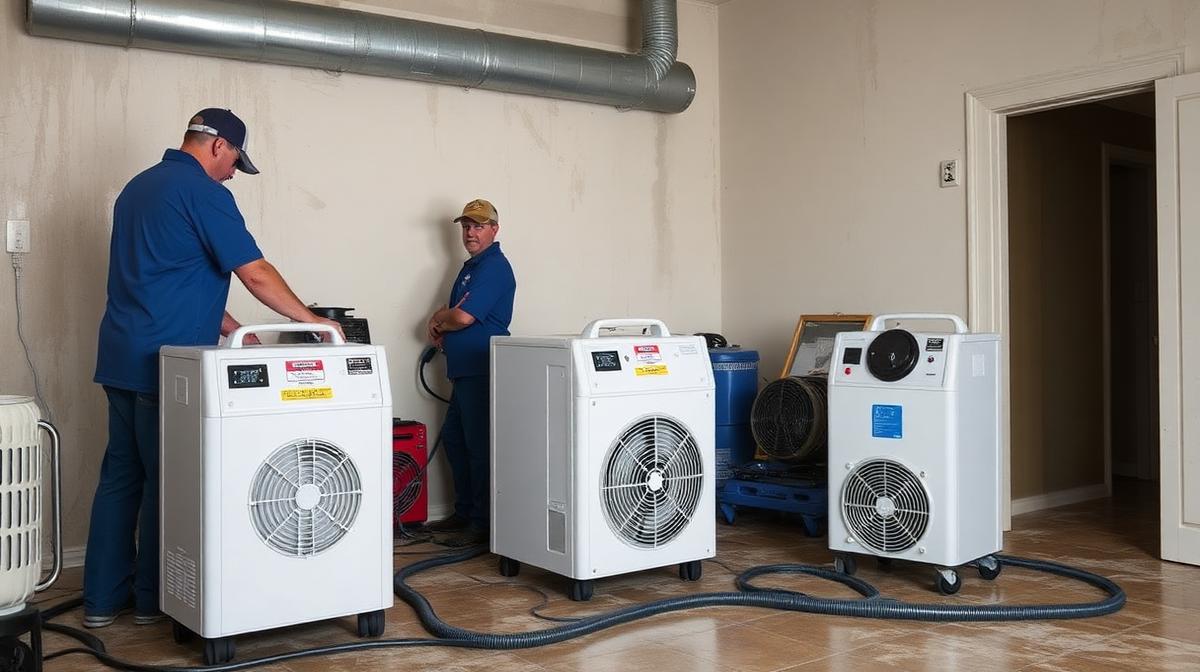
Industrial dehumidifiers power structural drying after water damage — pulling 130+ pints/day. LGR vs rental units, sizing math, and monitoring explained.
- ›A household dehumidifier removes 20–50 pints of water per day from a single room. An industrial LGR (low-grain refrigerant) dehumidifier …
- ›It depends on cubic footage and Class of loss. A general rule: one commercial LGR per 1,000–1,500 cubic feet for Class 2 losses, with adj…
- ›Rental units are typically standard refrigerant dehumidifiers, not LGR. They lose efficiency rapidly below 60% RH — exactly where structu…
- ›Typical structural drying runs 3–5 days continuously, with daily moisture monitoring to track progress. Equipment is removed only after e…
A box-store dehumidifier removes about 20 pints a day. A commercial LGR pulls more than 130. That difference is the difference between drying a wet wall in 3 days versus 14 — long enough for mold to take hold. Here's the actual physics behind industrial drying, and why professional equipment matters more than most homeowners realize.
Quick Answer — Industrial Dehumidifiers
Industrial LGR (low-grain refrigerant) dehumidifiers remove 130–250+ pints of water per day from structural materials, maintaining performance at humidity levels where consumer units fail. Paired with air movers, they cut drying time from weeks to days and prevent mold from establishing.
The Physics Behind Drying
Wet materials release moisture into the air. The drier the air, the faster materials release moisture. A dehumidifier's job is to remove water vapor from the air faster than it accumulates, creating a moisture gradient that pulls water out of building materials.
The key metric: grains per pound (GPP) of water in the air. Consumer dehumidifiers struggle to push air below 80 GPP. LGR units routinely achieve 40–50 GPP — the level structural drying actually requires.
LGR Technology Explained
LGR stands for Low-Grain Refrigerant. The unit pre-cools incoming air before it hits the main cooling coil, which lets it extract moisture at lower humidity levels where standard refrigerant dehumidifiers lose efficiency. This makes LGR units 2–4x more effective than rental units at the end of a drying cycle when the air is already dry.
How Pros Stage Equipment
- Calculate cubic footage of affected area
- Determine Class of loss (1–4) and target completion time
- Place one LGR per 1,000–1,500 cubic feet (adjusted for conditions)
- Position air movers at 12–16 ft intervals along walls, pointed at wet zones
- Run continuously with daily monitoring and adjustment
Why Rental Units Often Fail
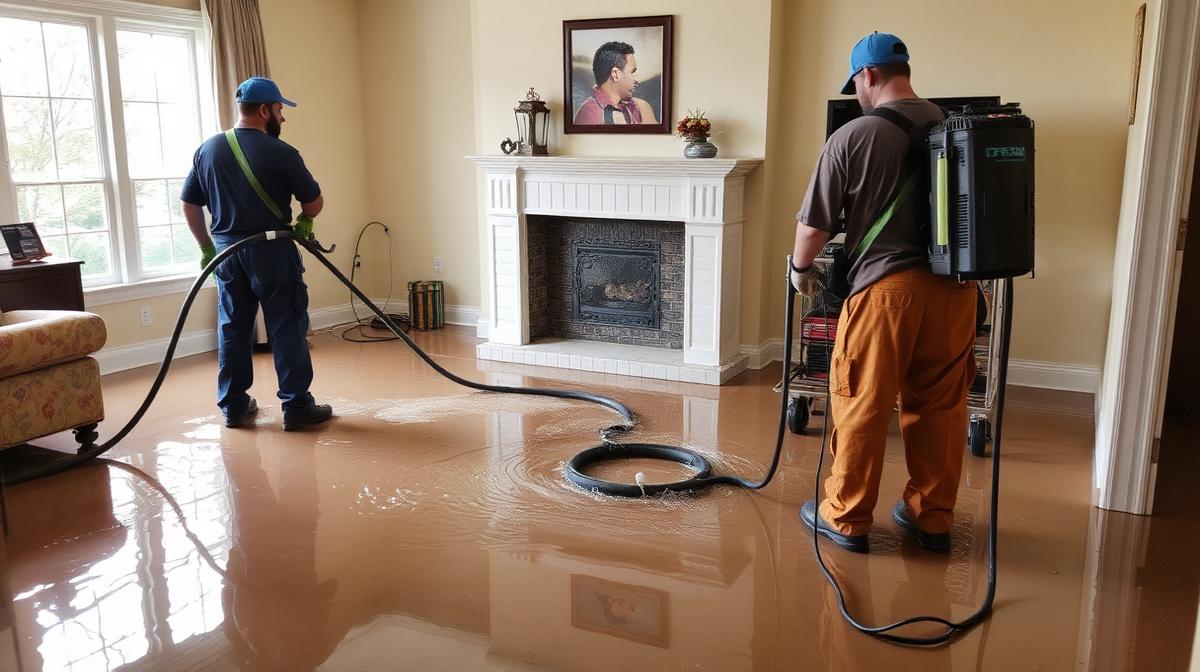
Rental dehumidifiers from box stores are designed for occasional humidity control, not 24/7 structural drying. Common problems: insufficient extraction rate, poor performance below 60% RH, inadequate airflow, and small water reservoirs requiring frequent draining. Restoration jobs that rely on rental equipment routinely take 2–3x longer and miss hidden moisture.
The Mold Connection
Mold growth begins between 24 and 48 hours after moisture contacts porous material. Industrial dehumidifiers are the equipment that closes that window before mold establishes. Combined with moisture mapping, they make professional drying fundamentally different from DIY.
Need professional drying equipment fast?
Call listed contractors directly and ask about commercial LGR dehumidifiers, axial air movers, and drying technician training.
Air Movers Are Half the Equation
Dehumidifiers pull water out of the air. Air movers push that moist boundary layer off the surface of wet materials so the dehumidifier has something to grab. Running one without the other is like turning on a kitchen exhaust fan with the windows closed. A typical Class 2 loss in a 400-square-foot room runs three to five centrifugal air movers paired with one LGR dehumidifier — placed at 10-to-16-foot intervals, angled at 15–45 degrees against wet walls.
How a Tech Decides How Much Equipment
The math the IICRC teaches is straightforward but rarely shown to homeowners. For a Class 2 loss: cubic feet ÷ 100 ≈ pints of dehumidification per day needed at the wettest point. A 12 × 15 × 8 ft bedroom is 1,440 cu ft — call it 130 pints/day, which is one commercial LGR. For Class 3 (water absorbed into ceilings, walls, and subfloors) the multiplier doubles. For Class 4 (saturated hardwood, plaster, concrete) it triples and contractors may add desiccant units that work below 20% RH.
What Daily Monitoring Actually Looks Like
A real drying log records, every 24 hours: ambient temperature, ambient RH, grains per pound, surface moisture readings on each wet material at predetermined locations, and dehumidifier output temperature. If grains aren't dropping day over day, the equipment is wrong, the containment is leaking, or there's a hidden moisture source that hasn't been found yet. A crew that "sets and forgets" equipment is gambling with mold growth and your insurance documentation.
Why Renting From Home Depot Falls Short
Standard refrigerant dehumidifiers ice up below about 65% RH because the coil surface temperature drops below freezing. They go into defrost mode every 30 minutes and stop extracting water during the cycle. LGR units use a pre-cool coil that lowers the air's dewpoint before it hits the main coil — they keep extracting down to about 35% RH. That single design difference is the reason a $4,000 commercial unit dries a wall in 3 days and a $300 rental can't finish the job in two weeks.
A Note on Power and Noise
Each LGR draws 8–11 amps. A typical residential drying setup pulls 25–35 amps across one or two circuits — which is why contractors may need to run extension cords to alternate panels or stage equipment across rooms. Expect 65–75 dB during drying and a daily electric bill bump of $8–$15. Most clients move to a guest room or stay with family for the 3–5 day drying window.
A Word on Equipment Calibration
Commercial dehumidifiers need annual coil cleaning and refrigerant pressure checks to maintain their rated extraction. A neglected unit can lose 30–40% of its capacity without producing any obvious symptom. Reputable Atlanta-area restoration companies tag and date equipment after each calibration — a small sticker on the side of the unit shows when it was last serviced. It's worth a glance before the equipment goes into your home.
Related Reading
Moisture mapping for mold prevention · How long restoration takes · Water damage contractor directory.
Frequently Asked Questions
What is the difference between a household and industrial dehumidifier?
A household dehumidifier removes 20–50 pints of water per day from a single room. An industrial LGR (low-grain refrigerant) dehumidifier removes 130–250+ pints per day and works at much lower humidity levels — drying structural materials, not just room air.
How many dehumidifiers does a typical water damage job need?
It depends on cubic footage and Class of loss. A general rule: one commercial LGR per 1,000–1,500 cubic feet for Class 2 losses, with adjustments for material type, contamination, and target completion time.
Why don't rental dehumidifiers work as well as professional units?
Rental units are typically standard refrigerant dehumidifiers, not LGR. They lose efficiency rapidly below 60% RH — exactly where structural drying needs the most performance. Professional LGR units maintain extraction at 40% RH and below.
How long do industrial dehumidifiers need to run?
Typical structural drying runs 3–5 days continuously, with daily moisture monitoring to track progress. Equipment is removed only after every measured surface reaches target moisture content — not on a fixed schedule.
Are industrial dehumidifiers loud?
Yes — commercial LGR units run at 65–75 dB, similar to a vacuum cleaner. Air movers add another 60–70 dB. The noise is unavoidable during active drying. Most homeowners stay elsewhere or relocate to unaffected areas of the home during the 3–5 day drying phase.
Related Articles You May Find Helpful
Compare water damage contractors near you
Need Help Right Now?
Phone: (470) 398-4095
✓ Directory help for Georgia homeowners
✓ Compare local water-damage contractors
✓ Contractor phones stay contractor-owned
EmesticaCure is a water damage contractor directory. Browse contractors or call (470) 398-4095 for help finding one.